Call Us
86-755-82924037
Call Us
86-755-82924037

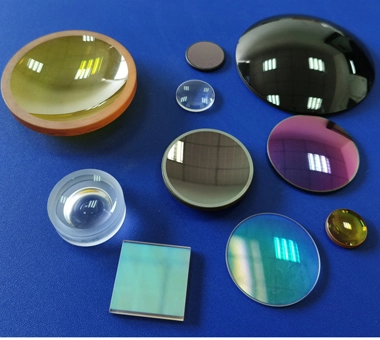
For optical systems exposed to extreme temperatures, abrasive particles, high pressure, chemical exposure, or mechanical impact, sapphire lenses are often the preferred solution because they offer exceptional hardness, thermal stability, and optical durability. Selecting the right lens sapphire solution requires evaluating application environment, wavelength range, mechanical requirements, coating options, and precision tolerances rather than focusing only on material strength.
Sapphire is widely used in harsh-environment optical systems because it combines excellent mechanical durability with reliable optical performance. Unlike conventional optical glass, sapphire is a single-crystal aluminum oxide material with outstanding resistance to scratching, wear, and thermal shock.
The key advantages of sapphire optical lenses include:
High hardness: Sapphire ranks second only to diamond in hardness, providing excellent resistance against abrasion and surface damage.
Superior thermal performance: Sapphire maintains structural stability at high temperatures, making it suitable for industrial, aerospace, and defense applications.
Chemical resistance: Sapphire performs well in environments exposed to corrosive chemicals and aggressive cleaning processes.
Wide optical transmission range: Sapphire supports transmission from ultraviolet (UV) through infrared (IR), depending on the optical design requirements.
For systems operating in extreme conditions, sapphire lenses help extend service life and maintain consistent optical performance where standard glass materials may fail.
Sapphire is not universally better than optical glass; it is better suited for applications where durability and environmental resistance are more important than cost and manufacturing simplicity.
Compared with standard optical glass, sapphire provides:
| Feature | Sapphire Lenses | Standard Optical Glass |
|---|---|---|
| Hardness | Extremely high | Moderate |
| Scratch resistance | Excellent | Lower |
| Thermal stability | Excellent | Limited depending on glass type |
| Chemical resistance | High | Varies |
| Machining difficulty | Higher | Easier |
| Cost | Higher | Lower |
The main trade-off is manufacturing complexity. Sapphire is difficult to process due to its hardness, requiring advanced grinding, polishing, and precision machining techniques. However, for applications where optical reliability is critical, the additional investment is often justified.
A sapphire lens is typically selected when optical components must withstand conditions such as:
Sand and dust exposure
High-temperature operation
High-pressure environments
Mechanical impact
Frequent cleaning or sterilization
Harsh industrial chemicals
In these situations, sapphire provides longer operational lifetime and reduces maintenance requirements.
Sapphire optical lenses are commonly used in industries where optical windows and imaging systems must maintain performance under challenging conditions.
Aerospace applications require materials that can withstand vibration, temperature changes, and environmental exposure. Sapphire lenses are used in protective windows, infrared imaging systems, and advanced optical sensors.
Industrial equipment often operates in environments containing dust, heat, and mechanical particles. Sapphire optics protect imaging systems while maintaining high-quality optical transmission.
Precision manufacturing processes require optical components with excellent dimensional stability and contamination resistance. Sapphire lenses are suitable for inspection, measurement, and processing equipment.
Medical and laboratory systems benefit from sapphire’s durability, chemical resistance, and ability to withstand repeated cleaning cycles.
Because sapphire maintains strength under pressure and resists corrosion, it is frequently considered for underwater cameras, sensors, and exploration equipment.
When sourcing sapphire lenses, providing detailed technical requirements helps manufacturers optimize design and production.
Important specifications include:
Define:
Operating wavelength range
Required transmission performance
Focal length
Diameter or dimensions
Optical power requirements
Imaging performance targets
Different applications may require sapphire materials optimized for UV, visible, or infrared wavelengths.
Specify:
Operating temperature range
Pressure conditions
Shock and vibration requirements
Mounting method
Environmental exposure
These factors influence material thickness, edge design, and mechanical integration.
Key parameters include:
Surface flatness
Surface roughness
Dimensional tolerance
Edge finishing requirements
Inspection standards
For high-precision optical systems, these specifications directly affect final system performance.
Although sapphire naturally provides excellent durability, optical coatings and manufacturing precision determine the final performance of sapphire optical lenses.
Sapphire has a relatively high refractive index, which can increase surface reflection. Anti-reflective (AR) coatings are often applied to improve light transmission and reduce optical losses.
Common coating options include:
UV anti-reflective coatings
Visible wavelength coatings
Infrared AR coatings
Protective hard coatings
The correct coating selection depends on the operating wavelength and environmental conditions.
Surface quality parameters such as scratch-dig rating and surface roughness influence:
Image clarity
Light scattering
Signal accuracy
System sensitivity
High-performance optical systems require tighter surface specifications to achieve reliable results.
Precision tolerances ensure proper integration with optical assemblies. Small dimensional deviations can affect alignment, focus accuracy, and overall system performance.
For applications such as imaging sensors and laser systems, tight tolerance control is essential for maintaining consistent optical output.
Choosing sapphire lenses for harsh-environment optical systems requires a balance between durability, optical performance, manufacturing precision, and cost. Sapphire offers significant advantages in applications where conventional optical materials cannot provide sufficient protection against heat, abrasion, chemicals, or mechanical stress.
By defining optical requirements, environmental conditions, coating needs, and tolerance specifications early in the sourcing process, engineers can select the right sapphire optical lenses for reliable long-term operation.
Sapphire lenses are used in aerospace, defense, industrial inspection, semiconductor equipment, medical instruments, and high-pressure optical systems where durability and environmental resistance are required.
Sapphire lenses provide superior hardness, thermal stability, and chemical resistance compared with many glass materials. However, glass may remain preferable for applications where lower cost and easier manufacturing are priorities.
Sapphire is extremely hard, making machining and polishing more challenging than standard optical glass. Specialized equipment and precision processing are required to achieve optical-grade surfaces.
The selection depends on wavelength requirements, operating environment, optical performance targets, mechanical constraints, coating requirements, and dimensional tolerances. Working with an experienced sapphire optics manufacturer helps ensure the design matches the application.
 English
 日本語
日本語 한국어
한국어 français
 Deutsch
 Español
 italiano
 português
 العربية
 tiếng việt
 ไทย
ไทย