Call Us
86-755-82924037
Call Us
86-755-82924037

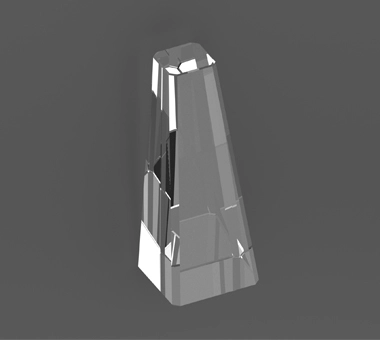
A pentaprism is used in cameras to redirect and correct the optical path from the lens to the viewfinder while maintaining image orientation and high optical accuracy. Unlike simple mirrors or standard prisms, a precision pentaprism provides a fixed 90° beam deviation without relying on critical angular alignment, making it ideal for professional camera systems that require stable imaging performance.
A pentaprism in camera systems is primarily used in DSLR and professional optical viewfinder designs to reflect light from the camera lens into the viewfinder while producing a correctly oriented image for the photographer.
When light enters through the camera lens, the image is initially inverted. The pentaprism redirects the light path and performs image correction so the photographer can view a natural, upright image through the optical viewfinder.
The main functions of a camera pentaprism include:
90-degree optical path deviation: Redirects light from the focusing screen to the viewfinder.
Image orientation correction: Provides a correctly oriented viewing image.
Stable optical alignment: Maintains consistent beam direction regardless of small mechanical variations.
High transmission efficiency: Supports bright and clear viewfinder images.
Compared with lower-cost alternatives such as pentamirror assemblies, glass pentaprisms provide better brightness, durability, and optical precision, which is why they are widely used in high-end cameras.
The key advantage of a pentaprism is that the reflected beam direction is determined by the prism geometry rather than the exact angle of the incoming light. Internal reflections inside the prism maintain a precise deviation angle, typically 90 degrees.
This characteristic makes a pentaprism highly reliable in imaging systems where optical stability is critical.
The advantages include:
Reduced sensitivity to assembly errors
Stable optical alignment over time
Consistent image positioning
Improved viewfinder accuracy
For professional imaging equipment, even small angular deviations can affect focusing accuracy and user experience. A precision-manufactured pentaprism minimizes these issues through strict control of prism angles and surface quality.
Camera optical systems require accurate alignment between the lens, focusing screen, prism, and viewfinder. Manufacturing errors in prism angles can introduce:
Image displacement
Focus inconsistencies
Reduced viewfinder accuracy
Optical distortion
High-quality pentaprisms are manufactured with tight angular tolerances and excellent surface finishes to ensure reliable performance.
Yes. A roof pentaprism incorporates a roof surface design that combines pentaprism geometry with a roof prism structure. It is commonly used in compact optical systems where space efficiency and image orientation correction are required.
The main differences are:
| Feature | Standard Pentaprism | Roof Pentaprism |
|---|---|---|
| Optical design | Five-sided prism with reflecting surfaces | Pentaprism combined with roof structure |
| Beam deviation | Typically fixed at 90° | Can provide compact folded optical paths |
| Image correction | Excellent | Excellent with additional roof correction |
| Manufacturing complexity | Moderate | Higher due to roof surface accuracy |
| Common use | DSLR optical viewfinders | Compact imaging and precision optical devices |
A traditional pentaprism is preferred when maximum brightness and optical simplicity are required. A roof pentaprism is selected when compact design and space optimization are more important.
A pentaprism offers several advantages over mirror-based systems:
Higher optical efficiency
Better durability
More stable alignment
Brighter viewfinder image
Improved performance under demanding conditions
Mirrors can degrade or shift over time, while a solid glass pentaprism provides long-term mechanical stability.
For camera and precision optical systems, pentaprism performance depends heavily on manufacturing accuracy.
Important specifications include:
The deviation angle of the prism surfaces must be tightly controlled. Small errors can affect image alignment and viewfinder accuracy.
Surface defects such as scratches, pits, or polishing irregularities can increase scattering and reduce image clarity.
Typical considerations include:
Scratch-dig specification
Surface flatness
Surface roughness
Clear aperture requirements
Optical coatings may be applied to improve light transmission and reduce reflection losses. Coating selection depends on wavelength range and application requirements.
Accurate prism dimensions ensure proper mechanical integration with the camera housing and optical assembly.
For high-end imaging systems, precise control of these parameters directly influences optical performance and production consistency.
When sourcing a custom pentaprism, engineers should define both optical and mechanical requirements.
Key specifications include:
Prism type: standard pentaprism or roof pentaprism
Beam deviation angle
Wavelength range
Transmission requirements
Coating requirements
Overall dimensions
Mounting structure
Weight limitations
Environmental conditions
Angular tolerance
Surface quality
Flatness
Edge processing requirements
For customized optical components, selecting an experienced manufacturer is essential because pentaprism production requires advanced grinding, polishing, coating, and inspection capabilities.
A pentaprism remains an important optical component in professional camera systems because it provides stable beam deviation, accurate image orientation, and reliable long-term performance. The unique geometry of a pentaprism allows cameras to achieve precise optical alignment without relying on fragile mirror systems.
When selecting a pentaprism for imaging applications, engineers should consider optical accuracy, surface quality, coating performance, and manufacturing capability. A properly specified pentaprism ensures consistent image quality and dependable operation in demanding optical instruments.
A pentaprism is used in a camera to redirect light from the lens to the viewfinder while correcting image orientation. It provides a bright and stable optical viewing path.
A pentaprism is made from solid optical glass and provides higher brightness and stability, while a pentamirror uses reflective surfaces and is generally lighter and less expensive but offers lower optical performance.
A roof pentaprism is used in compact optical systems that require image correction and efficient optical path folding. It is often selected when space and alignment accuracy are important.
A pentaprism maintains image stability through its fixed geometric reflection properties, which provide consistent beam deviation even when small variations occur in the incoming light path.
Important factors include prism material, deviation accuracy, surface quality, coating options, dimensional tolerance, and the manufacturer’s optical processing capability.
 English
 日本語
日本語 한국어
한국어 français
 Deutsch
 Español
 italiano
 português
 العربية
 tiếng việt
 ไทย
ไทย