Call Us
86-755-82924037
Call Us
86-755-82924037

In precision optical systems, an optical concave mirror is more than a reflective component. It controls how light is collected, focused, redirected, or shaped inside an optical path. Whether used in laser equipment, inspection systems, sensors, laboratory instruments, or custom optical assemblies, the mirror’s focal length, surface accuracy, substrate material, and coating quality can directly affect system performance.
For engineers and procurement teams, choosing a concave mirror is not only about selecting a diameter or a reflective coating. The real decision involves optical design requirements, manufacturing tolerance, surface quality, material stability, and the supplier’s ability to process complex curved surfaces with high consistency.
This guide explains how an optical concave mirror works, where it is commonly used, and what to consider when ordering custom concave mirrors for demanding optical applications.
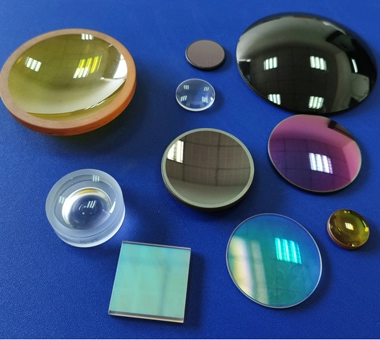
An optical concave mirror is a mirror with a reflective surface that curves inward. Unlike a flat mirror, which simply reflects light without changing its convergence, a concave mirror can bring incoming light rays toward a focal point. This makes it useful for light focusing, image formation, beam shaping, energy concentration, and optical measurement.
In optical engineering, concave mirrors are often used when a system needs to control reflected light with higher precision. Depending on the required optical path, a concave mirror may be designed as a spherical concave mirror, parabolic concave mirror, or a more customized curved optical surface.
A spherical concave mirror has a surface shaped like part of a sphere. It is commonly used in general optical systems because it is relatively practical to manufacture and suitable for many focusing applications. A parabolic concave mirror is designed to focus parallel light rays more accurately to a single point, making it valuable in systems where reduced spherical aberration is important.
The focusing behavior of a concave mirror is mainly determined by its curvature. When parallel light rays strike the reflective concave surface, they are reflected inward and converge near the focal point. The distance between the mirror surface and the focal point is called the focal length.
For a spherical concave mirror under paraxial conditions, the focal length is approximately half of the radius of curvature. In simple terms:
| Optical Parameter | Meaning |
|---|---|
| Radius of Curvature | The radius of the sphere from which the mirror surface is formed |
| Focal Length | The distance from the mirror to the focal point |
| Optical Axis | The central reference line of the optical system |
| Focal Point | The point where reflected light rays converge |
However, real optical systems are rarely that simple. Beam angle, mirror diameter, surface accuracy, coating performance, and alignment tolerance all influence the final optical result. This is why precision manufacturing and inspection are especially important when the optical concave mirror is used in laser systems, imaging instruments, or high-accuracy detection equipment.
Because a concave mirror can collect and focus light, it is widely used across industrial, scientific, and optical engineering applications. Its role may vary from simple beam redirection to highly controlled optical focusing.
Common applications include:
Laser focusing and beam shaping systems
Optical inspection and measurement instruments
Spectrometers and analytical equipment
Sensors and detection modules
Laboratory optical benches
Imaging and projection systems
Medical and scientific optical devices
Light collection and energy concentration systems
Custom optical assemblies for industrial equipment
In laser-related systems, an optical concave mirror can help concentrate light energy into a defined area. In inspection systems, it may be used to guide reflected light toward a detector or imaging sensor. In optical instruments, it can support light collection, focusing, or path folding within a compact structure.
For B2B buyers, the application environment should always be considered before confirming the mirror design. A mirror used in a laboratory instrument may have different requirements from one used in industrial inspection equipment, high-temperature environments, or compact optical modules.
Selecting a concave mirror requires more than confirming its basic size. Several technical parameters should be clearly defined before production, especially for custom optical components.
| Specification | Why It Matters |
| Diameter | Affects light collection area, system size, and mounting design |
| Radius of Curvature | Determines the focusing behavior of the mirror |
| Focal Length | Defines where reflected light converges |
| Substrate Material | Impacts thermal stability, weight, durability, and processing difficulty |
| Surface Accuracy | Influences focusing precision and optical performance |
| Surface Roughness | Affects scattering and reflected light quality |
| Coating Type | Improves reflectivity for specific wavelength ranges |
| Dimensional Tolerance | Ensures proper assembly into the optical system |
| Edge Treatment | Reduces chipping risk during handling and installation |
| Inspection Standard | Helps verify whether the mirror meets application requirements |
For custom projects, the substrate material is especially important. Glass, quartz, and ceramic materials each offer different advantages. Quartz may be selected for thermal stability and optical performance. Glass is widely used in many optical systems due to its processability and optical properties. Ceramic materials may be considered for applications that require hardness, structural stability, or special environmental resistance.
The more demanding the optical system, the more important it becomes to work with a manufacturer that understands both material behavior and precision surface processing.
A common question in optical design is whether to choose a spherical concave mirror or a parabolic concave mirror. The answer depends on the application, accuracy requirement, budget, and optical path design.
| Mirror Type | Main Advantage | Typical Applications |
| Spherical Concave Mirror | Easier to manufacture and cost-effective | General focusing, imaging, optical experiments, basic optical systems |
| Parabolic Concave Mirror | Better control of parallel rays and reduced spherical aberration | Laser systems, collimation, high-precision optical instruments |
| Custom Freeform Concave Mirror | Designed for special optical paths and compact systems | Advanced sensors, customized optical modules, special industrial equipment |
A spherical concave mirror may be suitable when the system does not require extremely strict aberration control. It is often preferred for standard focusing or reflection applications where cost and manufacturability are important.
A parabolic concave mirror is more suitable when parallel light needs to be focused more precisely. It is often used in systems where optical performance is more critical than manufacturing simplicity.
For highly customized systems, a standard spherical or parabolic shape may not be enough. In these cases, freeform surface processing or custom curve forming may be required to match the optical path, mechanical structure, or installation space.
The performance of an optical concave mirror depends heavily on manufacturing accuracy. Even a small surface deviation can affect the reflected wavefront, change the focal position, increase light scattering, or reduce system stability.
Key manufacturing factors include:
Curve forming accuracy
Surface polishing quality
Mirror grinding consistency
Dimensional control
Surface defect control
Coating compatibility
Measurement and inspection capability
For precision optical systems, the mirror surface must be processed and verified with high accuracy. This is especially true for applications involving laser beams, compact optical modules, high-resolution detection, or demanding alignment requirements.
Shenzhen Solar Valley has 24 years of experience in high-precision processing of non-metallic materials such as quartz, glass, and ceramics. With ultra-high precision production facilities, including single-point diamond turning machines, ultra-high precision CNC machining centers, array laser measurement devices, and high-magnification microscopes, Solar Valley supports the processing of complex optical structures with accuracy up to ±0.1 micrometers.
Through independent research and development, Solar Valley has also developed various processing tools and fixtures to support grooving, cutting, drilling, curve forming, taper hole shaping, end face grinding, surface polishing, ultra-high precision freeform surface processing, and mirror grinding. These capabilities are valuable for custom concave mirrors and other precision optical components that require strict dimensional and surface control.
When ordering a custom optical concave mirror, clear technical communication can reduce design errors, shorten development time, and improve production consistency. Before requesting a quotation, buyers should prepare as many technical details as possible.
Useful information includes:
Mirror diameter and thickness
Substrate material
Radius of curvature or focal length
Surface accuracy requirement
Surface quality requirement
Coating type and target wavelength range
Drawing or 3D model
Application environment
Assembly method
Quantity and expected delivery schedule
Inspection or testing requirements
If the project is still in the design stage, it is helpful to discuss the optical path and mechanical constraints with the manufacturer. In some cases, the mirror shape, edge structure, material, or processing route may need to be adjusted to balance optical performance, production feasibility, and cost.
For complex projects, sample development and verification are often recommended before mass production. This helps confirm whether the selected material, curvature, coating, and tolerance can meet the final system requirements.
An optical concave mirror is used for focusing, light collection, beam shaping, reflection imaging, optical detection, laser systems, laboratory instruments, and custom optical assemblies. Its main function is to control reflected light by bringing rays toward a focal point or a designed optical path.
A flat mirror reflects light without focusing it, while a concave mirror has an inward-curved reflective surface that can converge light. This makes concave mirrors more suitable for optical systems that require focusing, imaging, or light concentration.
The focal length of a concave mirror is related to its radius of curvature. For a spherical concave mirror under paraxial conditions, the focal length is approximately half of the radius of curvature. In practical applications, the final focusing performance also depends on mirror diameter, surface accuracy, alignment, and optical design.
Common substrate materials include glass, quartz, ceramic, and metal materials. The best material depends on optical performance, thermal stability, mechanical strength, processing requirements, and the working environment of the system.
Yes. A custom concave mirror can be manufactured according to specific requirements such as diameter, focal length, radius of curvature, substrate material, coating, surface quality, dimensional tolerance, and mounting structure. Custom manufacturing is especially useful for precision instruments and specialized optical systems.
When choosing an optical mirror manufacturer, buyers should evaluate material processing experience, surface polishing capability, curve forming accuracy, inspection equipment, coating support, custom engineering ability, and experience with precision optical components. For demanding applications, the supplier’s ability to control surface accuracy and dimensional tolerance is especially important.
An optical concave mirror plays a critical role in light focusing, beam control, imaging, detection, and custom optical system design. To achieve reliable performance, buyers should consider not only the mirror’s size and focal length, but also substrate material, surface accuracy, coating, polishing quality, and manufacturing tolerance.
As a precision optical processing manufacturer, Shenzhen Solar Valley supports customized optical components made from quartz, glass, ceramics, and other non-metallic materials. With 24 years of processing experience, ultra-high precision equipment, self-developed fixtures, and mirror grinding capabilities, Solar Valley can provide custom concave mirror solutions for demanding optical applications. For projects requiring specialized materials, complex curved surfaces, or high-accuracy processing, working with an experienced optical manufacturer can help improve both product performance and production reliability.
 English
 日本語
日本語 한국어
한국어 français
 Deutsch
 Español
 italiano
 português
 العربية
 tiếng việt
 ไทย
ไทย